
The Rare Brain Tumor That Changed My Life: The Recovery That Followed

In June 2024, at 30 years old, I learned that I had a very large vestibular schwannoma, also known as an acoustic neuroma. Until then, I never imagined that a rare brain tumor would completely divide my life into a “before” and an “after.”
My tumor was large enough to cause serious complications, including hydrocephalus. I underwent two brain surgeries in August 2024 to remove as much of it as safely possible. What followed was far more difficult than I ever could have anticipated. I experienced respiratory complications, needed a tracheostomy and feeding tube, and spent months in hospitals and rehabilitation, relearning many of the things I had once done without thinking.
When I finally began walking again, even a few steps felt enormous.
Navigating hearing loss and facial paralysis
The tumor and surgeries also left me completely deaf in my right ear and with facial paralysis on the right side of my face. Suddenly, hearing and communication worked differently. I struggled to locate where sounds were coming from, follow conversations in noisy environments, and understand people when several voices were competing at once.
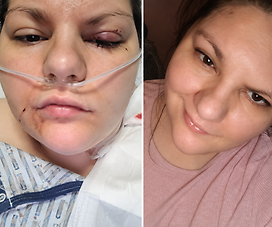
Facial paralysis affected me in another deeply personal way. I would look in the mirror and see a face that no longer moved the way it once had. Smiling, speaking, blinking, and expressing emotion—things most people never have to consciously think about—became part of my recovery.
The long road through treatments and recovery
Over time, I underwent additional treatments and surgeries. I had Gamma Knife radiosurgery for the remaining tumor and later underwent facial reanimation procedures in hopes of restoring movement and symmetry to my face. Recovery has been slow, measured in months and years rather than days.
There have been moments when progress was so gradual that I could barely recognize it while it was happening. Then I would look at an older photograph or remember where I had been months earlier and realize just how far I had come.
Surviving vs. recovering
Living with a rare condition has also taught me that surviving an illness and recovering from it are not the same thing. Survival was the beginning. Recovery has meant adapting to permanent hearing loss, balance difficulties, facial changes, physical limitations, and the emotional impact of having my life change so suddenly.
It has also meant learning how to build a life around what remains possible.
Finding purpose through writing
One of the ways I began processing everything I experienced was through writing. Eventually, I wrote and published my book, Surviving an Acoustic Neuroma: Facial Paralysis, Recovery, and Relearning Life, about my journey through diagnosis, treatment, facial paralysis, and recovery. Turning some of the most frightening experiences of my life into something that might help another patient gave those experiences a different purpose.
Looking ahead
I still have a residual tumor that continues to be monitored, so this chapter of my life is not completely finished. There are still appointments, scans, and uncertainty. But there is also progress.
I have learned to recognize victories that I once might have overlooked: walking farther, handling an appointment independently, hearing better with assistive technology, noticing small improvements in my face, sharing my story, or simply realizing that something that once felt impossible has become part of my normal life.
Rare diseases can make people feel incredibly isolated. Before my diagnosis, I had never even heard the words “vestibular schwannoma.” Now they are part of my life forever.
If someone newly diagnosed reads my story, I hope they understand that recovery does not have to look perfect to be meaningful. Progress can be painfully slow, messy, and unpredictable, and still be progress.
Two years ago, I was fighting simply to regain pieces of my everyday life.
Today, I can finally see how far I have come.
Join the conversation